ABOUT US
The Frantz Fanon Center
ABOUT US
The Frantz Fanon Center
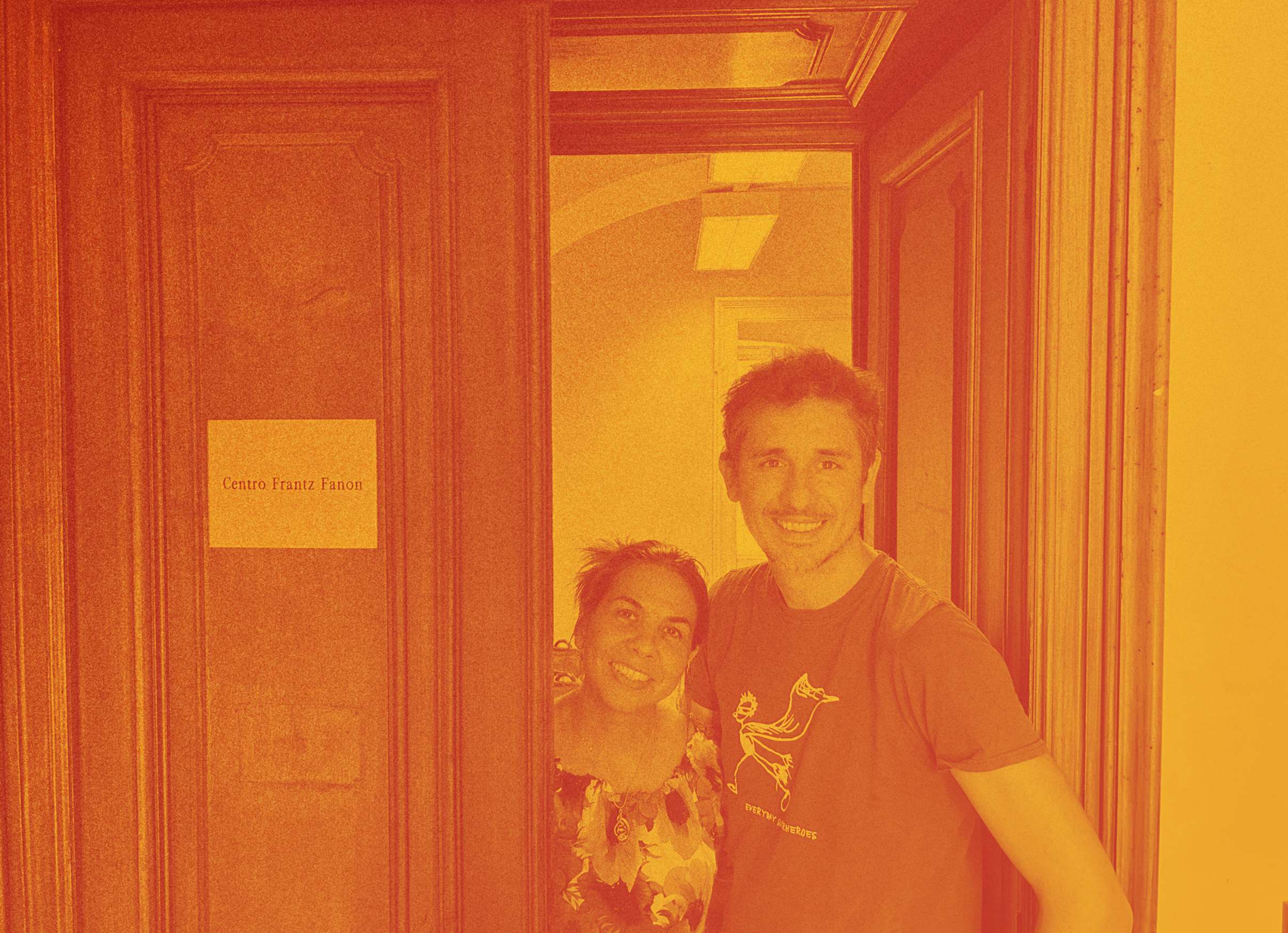
The Frantz Fanon Center, which represents the clinical arm of the Association, is a counseling, psychotherapy, and psychosocial support service for people with a migrant background, refugees, and victims of trafficking and torture. Its establishment was made possible thanks to agreements signed in the mid-1990s by the Frantz Fanon Association with the Mental Health Departments of the National Health Service. In almost 30 years of activity, several thousand users with a migrant background (individuals, families, couples) have been taken on by the Center’s team, which currently consists of about 15 operators, and there have been contacts with hundreds of social and health workers. Since 2013, the Center has ceased its collaboration with ASL TO 1 and continues its clinical and training activities at a new independent location in the center of Turin.
Methods
The Center’s working methods include both situations in which patients are referred by other social or health services and cases of “self-referral.” Their conditions of uncertainty and distress, if not confusion, require that they be welcomed with care and sensitivity, especially when they have suffered violent experiences, which is the norm for many people who have faced migration (patients who have suffered torture, asylum seekers, foreign women involved in trafficking and sexual exploitation, unaccompanied minors, etc.).
Preliminary attention must therefore be paid to structuring reception areas that are informal, welcoming, and as careful as possible not to reproduce institutionalized contexts where the routine of long waits, sometimes the coldness of the staff, the need to adapt to strict rules or pre-established settings risk generating anxiety-provoking situations or even reproducing stressful contexts (long queues to submit or collect documents, for example, are one of the most distressing experiences in the country of arrival, according to many asylum seekers), in order to ensure continuous and effective patient care.
Reception and psychotherapeutic treatment are provided by medical-psychiatric and psychological staff who, in addition to Italian, are fluent in the major languages (English, French, Spanish), in the presence of native-speaking mediators. The linguistic-cultural mediators identified have built up specific expertise in the area of psychological and psychiatric care, developed communication techniques sensitive to the specificities of this user group, and learned to collect data and information discreetly. Finally, over the years, together with clinical staff, they have developed a unique way of questioning cultural and religious affiliations, starting from an ongoing dialogue with anthropology and its fields of ethnographic research.
Psychopathology and culture—in this perspective—are not two spheres that contribute to the understanding of suffering by excluding each other: on the contrary, they can be taken up and worked on in their mutual implication, so as to provide those who exercise the therapeutic role, on the one hand, with fundamental elements for reading the forms of suffering and how they are influenced by cultural, social, and religious affiliations; and, on the other hand, providing an awareness of the dynamism of these affiliations, whereby individuals not only have a culture that in some way determines their behaviors, actions, and reactions, but (individuals) are also those who produce cultural practices through which they position themselves within the contexts in which they live and possibly suffer, incessantly negotiating possible forms of social recognition.